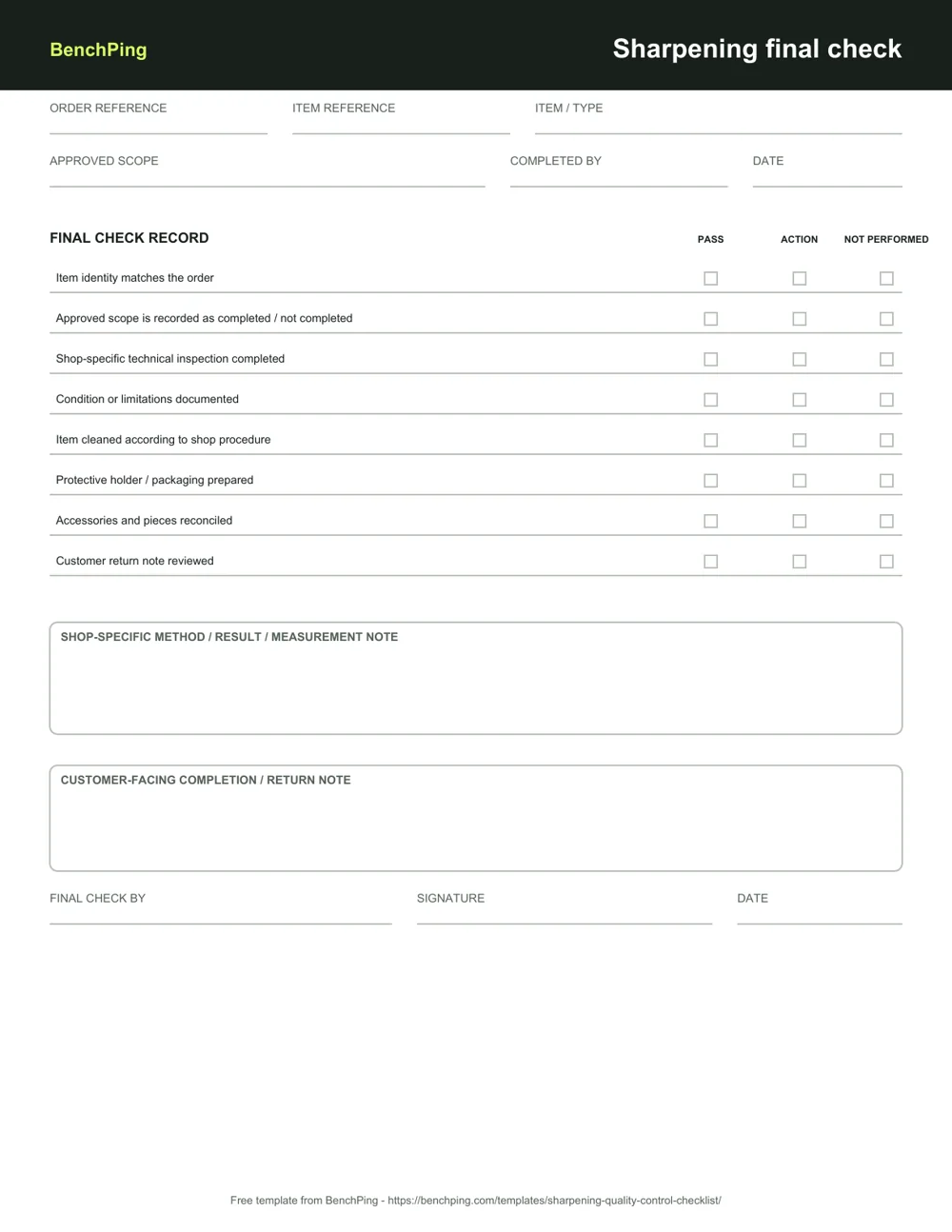
Download the sharpening final-check template
Print Letter or A4. The blank technical-check area is intentional: your shop must define the inspection method and acceptance criteria for each tool type it services.
Download PDF (Letter)Download PDF (A4)Confirm the item before checking the result
Match the repair and item references, tool description and approved scope. Separate returned-without-service items from completed items so the customer and return staff receive an accurate count.
Record what the shop actually checked
Use the checklist for identity, completed scope, relevant shop-defined technical inspection, cleanliness, protective packaging, accessories and item count. Mark a check Not performed when the shop did not perform it; do not convert an incomplete test into a pass.
The template does not define sharpness tests, angles, tolerances or safe-service decisions. Those belong in controlled procedures appropriate to the item and your professional practice.
Make the return note understandable
Summarize the completed work, items not serviced and any care or follow-up information the shop is qualified to provide. Keep technical measurements in the internal record and send the customer only the information needed for the handoff.
Customer update templatesSharpening workflowMore free repair shop templatesHow to use this template
Use the blank form as a consistent operational record. Adapt shop-specific instructions before putting it into daily use, and walk a new staff member through one completed example.
- Match the tool and work reference to the authorized scope before starting the final review. Keep similar items separated until identity is confirmed.
- Select the shop-controlled inspection method suitable for that tool. The blank checklist is a record of your procedure, not a substitute for training or manufacturer guidance.
- Record each check as actually performed. Use the action or not-performed option when a result needs follow-up or a check could not be completed.
- Resolve open actions before describing the item as ready. Record who reviewed the correction and preserve the earlier observation as part of the job history.
- Reconcile accessories and quantities, prepare appropriate protective packaging, and write a plain-language return note distinguishing completed work from items not serviced.
What each field is for
Repair and item references establish which tool the record covers. Confirm both against the intake record before checking the result.
Completed scope records the work actually carried out, which may differ from the customer’s initial request after assessment and approval.
Pass, action and not-performed columns describe the outcome of a defined check. A blank box must not be interpreted as a pass.
Final notes connect unresolved observations, packaging, accessories and return counts to the handoff. Do not turn a checklist signature into a blanket certification of safety or fitness.
Keep the record useful after the work
Keep the completed form with its estimate decisions, dated messages and return record. For paper files, use a private storage location with access limited to staff who need it. For digital copies, use your controlled shop system rather than a publicly shared folder.
If the customer does not collect the item, confirm the contact details and record a dated follow-up. Follow your disclosed collection policy and applicable local requirements; this template does not establish a storage charge, disposal right or universal deadline.
Set a retention schedule suited to your business obligations and local requirements. Avoid keeping unnecessary personal information indefinitely, and make sure staff know how to retrieve an older record when a customer asks about the work.
BenchPing can send status and pickup updates automatically as part of a configured workflow; keep the job status and customer contact preferences accurate before sending.
See the matching workshop workflow in BenchPingCommon questions
Does this checklist define a universal sharpness test?
No. Tool types and professional procedures differ. Add the controlled checks and acceptance criteria used by your shop.
What should I mark when a check was not performed?
Mark it Not performed and record the reason. Do not record a pass for work the shop did not check.