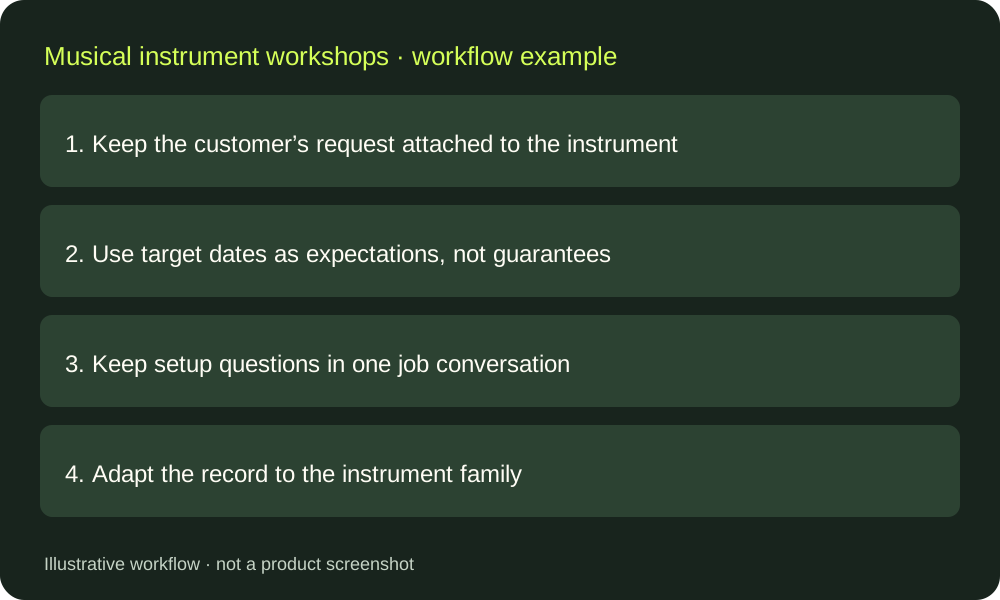
Keep the customer’s request attached to the instrument
Create one job reference per visit. Record the instrument, requested work and customer contact information. Keep workshop observations in internal notes, and put the agreed scope in a customer-facing summary. A returning customer’s earlier jobs can be opened from the customer history action.
You can rename Repair in Shop settings and configure custom statuses for your process. Use labels such as Assessment, Awaiting approval, Bench work and Final check, mapped to the underlying workflow stages.
Example, not a customer resultSample intake note: We’ll assess the fret wear and neck relief before confirming the setup work. Please message us here if you have a preferred string gauge.
Use target dates as expectations, not guarantees
Set the expected completion date and time when you can make a useful estimate. If inspection reveals extra work, update the price and explain the change before requesting approval. When a part or material is delayed, tell the customer what needs to happen next.
A spreadsheet connection reads the source on the configured paid-plan schedule. For a job managed in BenchPing, update it directly. In either workflow, check delivery history to distinguish a successful notification from a failed email or text.
Example, not a customer resultSample progress update: The replacement tuning machine has arrived. We’ll fit it, complete the setup and check tuning stability before confirming collection.
Keep setup questions in one job conversation
Customers can ask about collection or clarify the requested work from their tracking page. The shop receives an email copy of their message; replies from the shop are copied by email to the customer. Neither side has to keep the page open to notice a reply.
The unique link opens without a customer account, so keep it confidential. BenchPing tracks work and communication; it is not an instrument valuation, rental-management or payment-terminal system. Start with up to five active jobs on Free, then move to a paid plan when you need scheduled sync or a larger queue.
Adapt the record to the instrument family
A guitar setup may need string gauge, tuning and action preferences. Brass and woodwind work may need the mouthpiece, case and serial reference. Bowed strings can require bow or case details, while percussion jobs may involve paired components or hardware. Keep those specifics in the repair record without turning the customer-facing status into a technical worksheet.
Use the same stable repair reference on the case tag, bench notes and customer communication. Photograph identifying features and received accessories only when useful, explain the workshop process, and avoid collecting unrelated personal information.
| Instrument family | Useful intake details | Customer milestone |
|---|---|---|
| Guitar and fretted | Instrument, serial reference, tuning, strings, case | Assessment and setup approval |
| Brass and woodwind | Instrument, mouthpiece, case, reported playing issue | Evaluation, parts or specialist handoff |
| Bowed strings | Instrument, bow, case, visible condition | Scope approval and careful collection handoff |
| Percussion | Item or pair, hardware, finish and accessories | Parts, repair and functional check |
Make outside specialist work visible
Some repairs move to a bow specialist, electronics technician, finisher or supplier. Record the handoff date, the next confirmed checkpoint and which workshop still owns communication. Do not expose private supplier notes on the tracking page; summarize only what helps the customer understand the delay or next decision.
When the item returns, move it through the workshop’s own inspection or playing test before announcing pickup. BenchPing organizes the job timeline and messages; it does not provide lutherie measurements, tuning standards, valuation, insurance documentation or technical certification.
Guitar repair softwareTags for school rental batchesCommon questions
Can I track guitars, brass, woodwind and orchestral instruments?
Yes. Use shared stages for intake, approval, parts, work and pickup, then keep instrument-specific measurements and technical notes in the fields or specialist systems your workshop already uses.
Can a customer approve a changed estimate?
BenchPing can present the updated estimate and preserve the customer decision with the repair. Define the authorized scope clearly and request a new decision when it changes.
Does BenchPing replace specialist workshop records?
No. It supports job tracking and customer communication, not valuation, regulated documentation, technical measurements or instrument-specific certification.