Make the garment and the request unambiguous
An alterations ticket needs more than “hem trousers.” Record the garment type, identifying description, number of pieces and agreed work. Confirm whether the customer has supplied trim, buttons or other materials. Photograph condition only where appropriate and with a clear purpose; do not collect unnecessary body images.
Separate a customer’s event date from a completion promise. If a fitting must happen first, record the fitting decision in the work notes and agree the next contact step. BenchPing is not an appointment scheduling system, body measurement database or pattern-design tool. Keep specialist fitting and pattern records in the system your team already uses.
Resolve changes before cutting or sewing
A fitting can change the scope. Record what was requested, what was approved and which estimate now applies before proceeding. If the customer asks for another alteration in a message, acknowledge it and update the job context; do not assume every casual reply authorizes a price increase.
A useful handoff is received → fitting or assessment → scope approved → alterations → quality check → ready. Describe the next action in the customer note when the standard job status is broader than your workshop stage.
| Situation | Clear next step |
|---|---|
| Fit needs confirmation | Ask the customer to contact the shop to arrange a fitting |
| Extra work requested | Confirm revised scope and estimate |
| Material unavailable | Offer a real choice, not a guessed substitute |
| Work complete | Confirm collection and any final fit check |
Messages that protect the event deadline
Be explicit about what is confirmed. An event date should not silently become an unconditional delivery guarantee.
- Scope: “We have recorded [alterations] for your [garment]. Please review the estimate; we will proceed after approval.”
- Fitting required: “Before finishing [detail], we need to confirm the fit. Please reply so we can arrange the next fitting.”
- Change: “The requested [extra work] changes the estimate to [amount]. Please confirm before we continue.”
- Ready: “Your [garment] is ready for collection. Please allow time for the final fit check at pickup.”
Keep supplies separate from customer-owned garments
Inventory can track your own thread, fasteners and other consumables. Use a consistent unit and only record consumption you can measure meaningfully. A customer’s garment is the job item, not a stock item available to another order.
At collection, check the number of pieces and return customer-supplied materials according to the agreement. Keep the same reference on the garment bag and order record; a shared customer surname is not enough to identify similar garments.
Where BenchPing fits — and where it does not
Use BenchPing for the job record, estimates, status updates, customer tracking links and conversations. Inventory keeps parts, supplies and materials connected to work. It is not a checkout, accounting package, diagnostic tool or specialist certification system. Keep those systems when your business needs them.
Start with a small real queue, check the customer-facing note before sending it and review delivery history. Email, tracking pages and customer conversations are the starting point outside Canada. Optional SMS currently supports Canadian recipients only and uses separately purchased credits with customer permission.
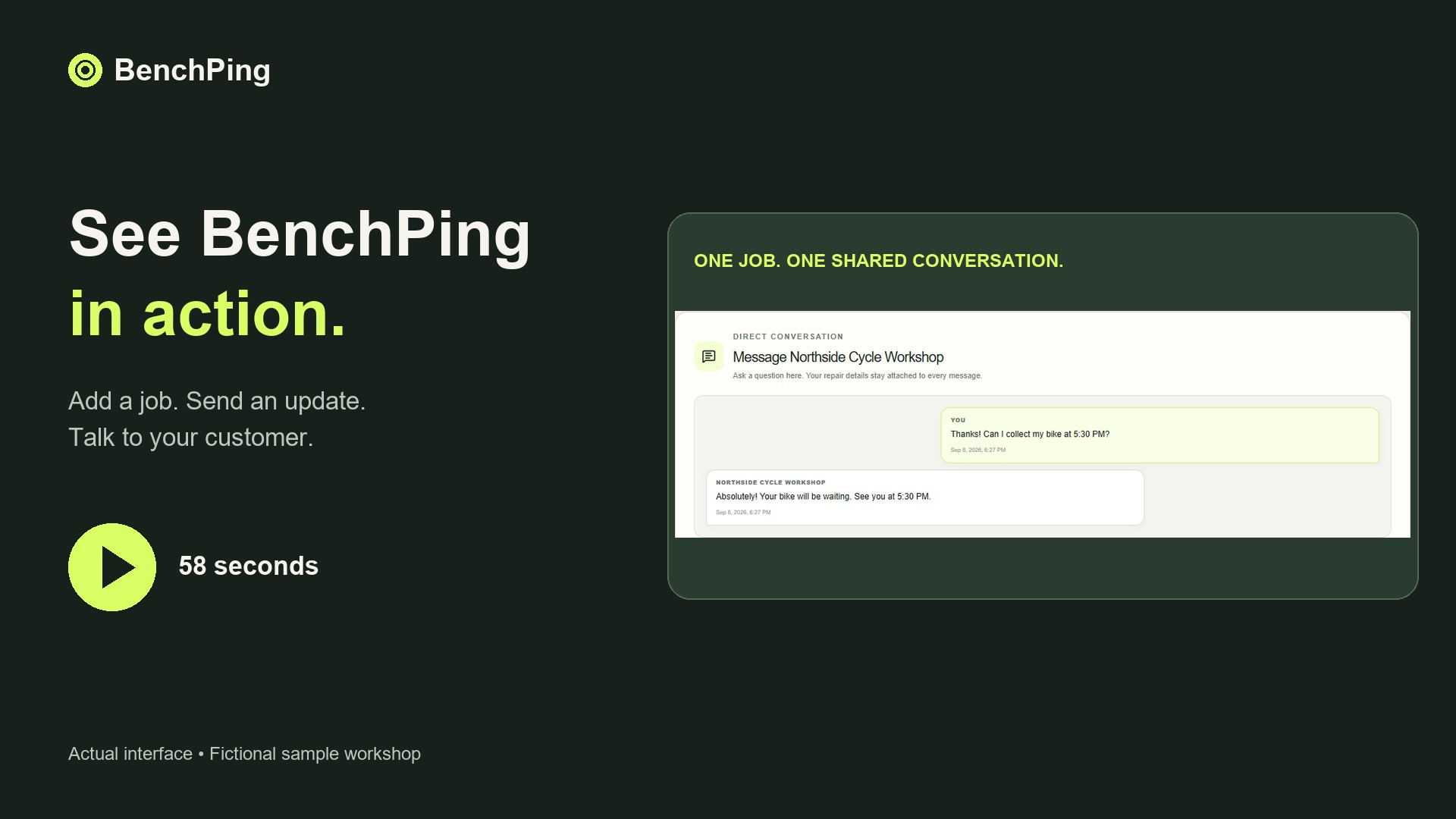
Compare Free, Solo and Shop limitsWatch the actual repair-to-customer workflowTry the workflow before moving your whole queue
Create one example job and use your own email address as the customer contact. Send an update, open the tracking page and reply. Check which information appears to the customer and keep internal notes separate. Tracking links work without a customer login: anyone holding the link can see that customer-facing record, so do not publish it.
Then enter a few current jobs. Keep your original records while checking references, estimates and contact details. CSV or XLSX file import is a one-time import, not continuous synchronization; review mappings before confirming it. A connected public spreadsheet is a different workflow and requires an accessible source. Never publish a spreadsheet containing information that should remain private.
Download the repair order CSV templateBuild a clear estimate approval handoffCommon questions
Does BenchPing include a fitting calendar or pattern design?
No. Use it for order tracking, estimates and customer updates alongside your existing appointment and specialist tools.