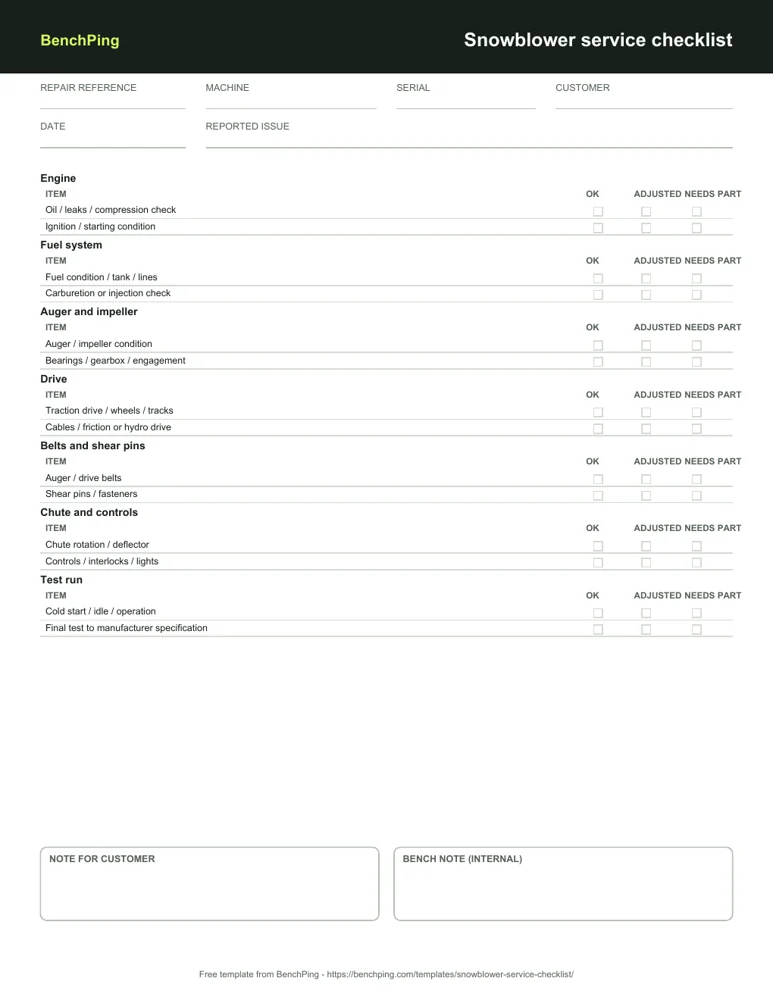
Download the snowblower service checklist
Print the paper size used by your shop. Add the repair reference, machine, serial, customer and date before inspection. Keep the completed sheet with the repair record.
Download PDF (Letter)Download PDF (A4)Inspect the machine in a repeatable sequence
Begin with the received condition and customer report, then follow the shop’s approved process through engine, fuel system, auger and impeller, drive, belts and shear pins, chute, controls and test run. Mark each line OK, Adjusted or Needs part so another staff member can see the next action.
A checklist records observations; it does not supply service specifications. Set fasteners, clearances and valve adjustments only to the manufacturer’s specification for that machine. Follow the manufacturer’s fuel, battery, ignition isolation and cold-weather operating procedures.
Separate routine service from parts decisions
Record a damaged belt, shear pin, cable, skid shoe or other component as a distinct finding. Confirm availability and customer authorization before expanding the agreed scope. Keep supplier references and technical measurements in the bench note; use the customer note for a clear summary of the decision required.
If a machine cannot be safely run, mark the test as not performed and record why. Do not convert an incomplete test into an OK result. After work, document the shop’s actual test outcome and any follow-up recommendation without making a general guarantee about future operation.
Keep seasonal queues understandable
Use one stable repair reference on the machine tag, checklist and messages. When snow creates a rush, group similar work at the bench without merging customer records. A promised date should reflect the confirmed queue and parts status, not only the customer’s preferred date.
Plan a snowblower repair season queueSmall-engine repair trackingMore free repair shop templatesHow to use this template
Use the blank form as a consistent operational record. Adapt shop-specific instructions before putting it into daily use, and walk a new staff member through one completed example.
- Record the machine identity and customer-reported symptoms at receipt. Match model and serial details to the machine rather than copying an older customer record.
- Note received condition, attachments and relevant operating history. Separate the customer’s description of a fault from the technician’s diagnosis.
- Follow the manufacturer’s service and safety instructions for that model. The checklist organizes the record; it does not prescribe disassembly, testing or repair procedures.
- Mark each relevant engine, fuel, auger, drive and test-run check honestly. Document checks not performed and obtain approval before expanding work beyond the agreed scope.
- Record the actual work and remaining recommendations, reconcile accessories, and explain collection arrangements only after the shop confirms the machine is ready.
What each field is for
Customer and machine identity keep the service record attached to the correct unit. Serial details are especially useful when several similar machines arrive during the same week.
Reported symptoms explain why the customer brought the machine in. Record when the symptom occurs without treating that report as a confirmed cause.
Check results distinguish inspected, adjusted and unresolved items. Add a clear note when an inspection depends on a part, operating condition or further authorization.
Service notes and completion information summarize what the shop actually did. Record a test only when performed under the appropriate procedure, and retain outstanding recommendations for the customer handoff.
Keep the record useful after the work
Keep the completed form with its estimate decisions, dated messages and return record. For paper files, use a private storage location with access limited to staff who need it. For digital copies, use your controlled shop system rather than a publicly shared folder.
If the customer does not collect the item, confirm the contact details and record a dated follow-up. Follow your disclosed collection policy and applicable local requirements; this template does not establish a storage charge, disposal right or universal deadline.
Set a retention schedule suited to your business obligations and local requirements. Avoid keeping unnecessary personal information indefinitely, and make sure staff know how to retrieve an older record when a customer asks about the work.
BenchPing can send status and pickup updates automatically as part of a configured workflow; keep the job status and customer contact preferences accurate before sending.
See the matching workshop workflow in BenchPingCommon questions
Does the checklist include torque or valve-clearance values?
No. Use the manufacturer’s specification for the exact machine and engine.
What if the snowblower cannot be test-run?
Record Not tested and the reason. Do not mark a function OK when the shop did not perform the test.